
October 5, 2023
How many of you associate Rwanda with the word “genocide”? You might shake your heads in disbelief, wondering how Rwanda could ever recover from such a horrifying catastrophe and what its future holds.
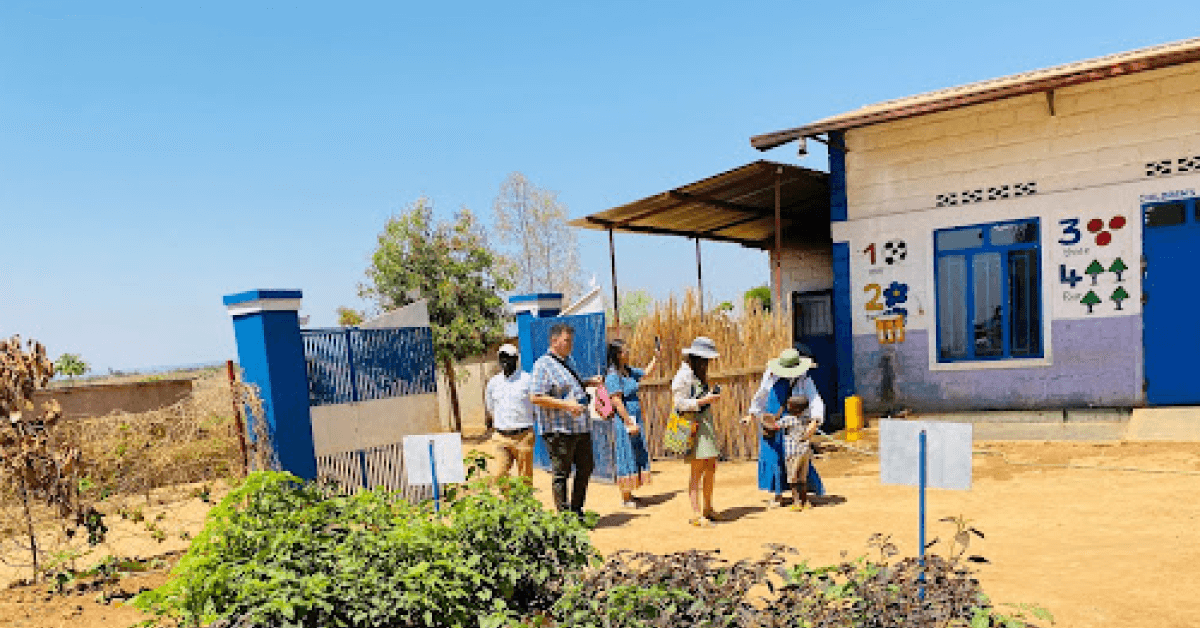
This summer, after a year of researching Rwanda’s history, politics, and culture, a group of 5 teachers from the University School of Milwaukee (USM) embarked on a 10-day trip there. What we saw and experienced completely shattered our preconceived notions. The 1994 genocide has cast a long shadow over Rwanda’s present and future. However, upon landing at Kigali International Airport and inhaling the fresh, crisp summer evening air, we quickly realized that being in Rwanda felt more like visiting a national forest in California.
What struck us next were the Rwandans’ genuine and cheerful smiles, and the country’s remarkable cleanliness, even in areas with dirt roads and mud houses. In less than 30 years, Rwanda has shattered our fixed understanding of post-genocide Rwanda and the constructed stereotypes we held. How?
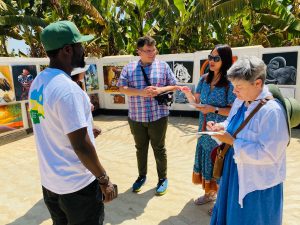
We unexpectedly found answers during our visit to Journey House Action (JHA) in the rural area of Gashora and in our meeting with their executive director, Rogers Kimuli. Rogers is an instantly captivating individual. After working undercover for the LGBTQ community in the Presidential Office for six years, he was admitted to the yearlong “Community Solutions” program run by the U.S. Department of State in 2017. This marked the beginning of his numerous community-based projects.
With the support of American Friends of Journey House Action Rwanda (AFJHAR), Rogers established a nursery school for 300 children and provided free meals twice a day for the kids. He firmly believes, “Children can’t come to school with empty stomachs; they must be fed first.” However, despite this remarkable achievement, 1,100 children in the community still lack access to education.
Rogers also initiated a small pig farm, which has now grown to house 125 pigs, providing employment for 16 women and youth. Additionally, he started a community dairy farm that has expanded to 49 cows, offering jobs to 54 young people. Rogers passionately explained, “My boys need an opportunity, any opportunity, to keep them off the streets, away from drugs, and out of gangs.” Many of the teens expressed gratitude for the life-changing chances they’ve been given. Rogers didn’t limit his efforts to helping boys. He gathered women from the community to teach them skills such as weaving African baskets, making earrings and bracelets, and sewing sanitation pads. He believes that just as free condoms are provided to boys for safe sex, girls should receive sanitation pads for menstruation.
After visiting the dairy farm, Rogers took us to a nearby lake and shared his plans to build a school for girls with a dormitory, with construction starting in the fall.
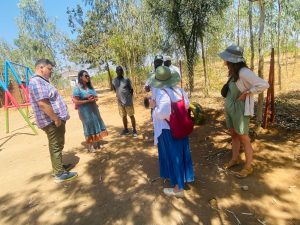
Rogers’ passion is contagious. As we peered through the window at their one-room library, Rogers expressed his desire for more diverse books. To address this, a collaborative book project idea was born. USM students will interview Rogers’ children, record their family and life stories, and turn them into books, printing and sending them back to Rogers. “There are so many ‘isms’ out there, but I advocate for ‘smile-ism’. A small act to bring a smile to another person’s face is a victory,” Rogers said.
Rogers concluded our visit with a hummingbird story. The legend goes that during a massive forest fire, all the large animals fled from the forest. At the same time, a flock of hummingbirds continued flying to the river, using their tiny beaks to carry water and extinguish the fire. Despite being ridiculed, they persevered until the fire was extinguished. “Anything you do is an act of a hummingbird,” Rogers declared, gazing toward the sky, as if he were sending his hopes, wishes, and desires there.
Yes, everything we do, regardless of how trivial it might seem, can have a long-lasting impact on others. If you are interested in landing a helping hand at Journey House Actions, please contact me or them directly. Together, we make the world a better place.
Part 2 will be about lessons of leadership in Rwanda.
You may also be interested in reading more articles written by Haiyun Lu for Intrepid Ed News.