


May 30, 2023
Educators have had growing and understandable concerns about anxiety, an emotion that gained significant attention during the Covid-19 pandemic. But in delivering a keynote address at this year’s National Association of Independent Schools Annual Conference, Dr. Tracy Dennis-Tiwary shared surprising news: anxiety can be good for us.
No, really. Read on . . .
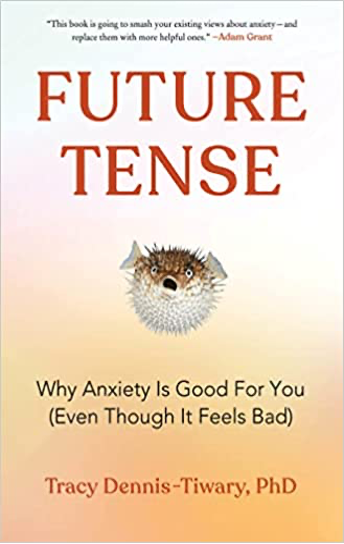
Dr. Dennis-Tiwary’s inspiring remarks were grounded in the research that she’s done for her brilliant new book, Future Tense: Why Anxiety Is Good For You (Even Though It Feels Bad). During her speech, Dr. Dennis-Tiwary offered reassurance that anxiety is not a dysfunction or a character flaw to eradicate, but rather a potentially vital source of wisdom, insofar as we learn how to harness its power in shaping a better future.
After the conference, I interviewed Dr. Dennis-Tiwary to discuss her new book. How, I wondered, might her book teach educators and parents to reframe their beliefs about anxiety? How might its insights help us better support the children in our lives? And how might such insights help us radically rethink our relationship to our world and its perils as well as our communities and each other?
The questions are apt; Dr. Dennis-Tiwary’s book really is that good and augurs that much of a paradigm shift. Our conversation has been condensed and edited for clarity.
- In your book, you argue that we need anxiety. Why do we need it?
Anxiety is not a disorder, but an emotion. We cannot avoid it. Anxiety is uncertainty about the future. It tells us that something negative could be around the bend. But because it hasn’t happened yet, something positive is still possible. Anxiety allows us to project into the future with some distance and helps us navigate that space. It is productive and positive.
- When anxiety is broadly defined as a medical disorder, how does that undermine our ability to deal with normal anxiety in healthy ways?
There are two ways that our notions of anxiety disorders are actually blocking our ability to cope with anxiety.
One is that we completely equate the emotion of anxiety with a disorder. That’s a big mistake because you’re only diagnosed with an anxiety disorder when the ways that you cope with anxiety and distress are actually causing functional impairment. In other words, your anxiety is getting in the way of being able to work, go to school, or have healthy relationships. So, just having a lot of anxiety every day actually isn’t enough to have a disorder. You must have that functional impairment.
Second, when we equate the emotion of anxiety with a disorder, we start to avoid all experiences of anxiety. And unfortunately, the avoidance of anxiety is a recipe for making it worse. When we suppress things or avoid them, we don’t learn to cope with them. This behavior actually drives the vicious cycle of anxiety, whether it’s just the emotion of anxiety or a disorder.

- What habits or practices best alleviate anxiety?
I describe the best strategies as falling under a rubric that I call the three L’s: listen, leverage, and let go. These steps allow you to engage with anxiety in healthy ways so that you can work through it rather than around it.
When you start by listening, you treat anxiety as information, and all of a sudden you experience the benefits of why we’ve evolved to have it. Negative emotions give us information about how we are doing in the world and what we need. We know from working with kids that when you name it, you tame it. Writing worries down makes them concrete and specific. You might write about an upcoming test and particular concepts you don’t understand. When you articulate anxieties in this concrete way, you get information.
Once we have that information, we can leverage it. We can hitch it to a goal that we can articulate. We can use test anxiety to make a plan to study and focus on the material that’s difficult. As soon as we make plans, anxiety starts to decrease. Leverage involves future-tense thinking. When you identify your anxiety, you can almost always find some action you can take to make things better.
The third piece involves letting go, but that’s usually where people start. It usually takes the form of avoidance, which is an unhelpful thing to do. When I’m talking about letting go, I’m thinking that you’ve very deliberately tried to listen and to leverage. But sometimes anxiety doesn’t reveal its secrets all that easily, or we have other things in our lives that need attention. You know the acronym HALT (hungry, angry, lonely, tired). Sometimes we just have to go to bed. We have to rejuvenate. For some of us, that means turning to a wellness or spiritual practice. For others, it means having coffee with a friend. I love writing poetry because it absorbs me in the present.
- In your book, you argue that perfectionism is best replaced by excellencism. Why is that important?
When we hold ourselves to standards of flawlessness, we are trying to avoid failing or having others judge us. We figure if we are perfect, no one can say anything bad about us. This is a losing battle. We are less creative and productive when we try to be perfect. And we are also at a higher risk for problematic anxiety.
Instead, we should strive for excellence. You have to know that excellence is going to be less than 100%. You will fail along the way, but doing great work is a journey. When you allow yourself to make some mistakes, you are more creative and dynamic.
- You note that girls are more likely than boys to be diagnosed with an anxiety disorder when puberty hits. Why is that?
We don’t really know. It’s fascinating that when girls and boys are prepubescent, their rates of anxiety disorders are exactly the same. People have thought maybe girls’ higher rates during puberty are the result of biology. But girls are also socialized to be more perfectionistic than boys. Perfectionism creates more risks for anxiety disorders. It’s more acceptable from a gendered-socialization standpoint for girls to experience and express vulnerable emotions like anxiety.
- We are in this historical moment in which we tend to pride ourselves on having “safe spaces” in schools. Yet, you caution readers against the modern concept of safe spaces. Could you articulate your concern?
Safe spaces today hinge on the notion of triggering, an idea that came out of trauma literature, cautioning us to be mindful that people who are working through trauma should not be constantly reexposed to this trauma.
But now we’ve assumed that any upsetting information can damage people. This is simply not true. People need the opportunity to experience and work through—in a supportive environment—difficult content. No hate speech, no violence, none of these kinds of things should be allowed in our spaces. At the same time, we’ve equated something that’s emotionally challenging—even a difference of opinion—with emotional damage. And the fact is that not only does the data not support that, but there’s good reason to believe that this approach makes people more emotionally vulnerable. People need to have difficult conversations to build very needed coping skills.
- What advice do you have for parents who want to quell their children’s anxiety?
Our job as parents is not to protect our kids from the inevitable challenges that life will throw their way but to prepare them to meet such challenges. We become snowplow parents when we try to remove all obstacles to our children’s happiness. But snowplow parenting makes kids more vulnerable and less resilient. And that’s because of this idea of antifragility. Antifragility is the characteristic of growing stronger because of adversity, not despite it. Our immune system is a great example of an antifragile system. If we don’t throw viruses and bacteria at it, our bodies won’t learn to mount an immune response. Our emotions are the same way. If we don’t allow kids to struggle with difficulty and uncertainty, they won’t learn to cope.
- In your book, you explore the correlation between phones and anxiety and even compare phones to casinos. Can you explain what you mean?
A casino has curves rather than sharp edges. You aren’t quite sure where you are, and you just keep going by game tables and are seduced in. Technology companies designed phones to suck us in and removed any friction in our interactions with them. This makes us compulsively pick them up.
In some ways, phones are also like slot machines because of intermittent reinforcement. You don’t know when or if you’ll get notifications or likes. You put your token in the slot machine and don’t know when or if you’ll get three cherries in a row. Intermittent reinforcement is the most powerful way to get people to keep repeating a behavior. Because we carry phones with us, it’s as if we have a mini-casino in our pocket.
- What advice would you give parents who would like to explore an off-ramp in terms of the anxiety medication their children are taking?
Medication should be used in conjunction with cognitive behavior therapy. The medication can lower anxiety so that the child can learn new skills to deal with it. Medication is not meant to be a forever treatment. Once the child has some skills to manage their anxiety, parents can discontinue medication under the supervision of their child’s therapist or healthcare professional.
Reflecting upon my interview with Tracy Dennis-Tiwary, I have two key takeaways that I hope to put into practice at school. First, we should begin using lower-stakes language to describe anxiety because currently, the word carries such a heightened, clinical meaning. Using vocabulary words like worry, nervousness, or apprehension should deescalate students’ fears and help them distinguish between anxiety disorders and anxious feelings.
Secondly, we need to normalize anxious feelings so that students who experience them can interpret them as natural. When teachers schedule a test or a speech, they should tell students that feeling nervous is to be expected. Their nervousness indicates that they care and want to do well on the assignment. We can advise them to harness that nervous energy to make a plan for tackling the task ahead.
At home, parents can normalize anxious feelings by sharing experiences that make them anxious, whether that involves flying or visiting the dentist. By doing so, kids will come to understand that such feelings never go away. They are simply part of the human experience and we learn to manage them.
By being intentional about helping our kids manage the anxieties that are a natural part of growing up, we will build more resilient, self-assured adults.
You may also be interested in reading more articles written by Elaine Griffin for Intrepid Ed News.