

April 6, 2023
Conceptualized and designed in 2008 as a program that would provide opportunities for students to customize a learning experience, Berwick Academy’s Innovation Center and Innovation Pursuit® (IP) program are more relevant than ever; especially in these days of test-optional college admissions.
From the very beginning, what made Berwick’s IPs innovative was its student-driven and student-designed focus. Students have voice and choice in their learning and eagerly follow their passions to develop a body of work that, over the course of many months, represents a wealth of knowledge. The learning is meaningful, and from our experience, colleges and universities will consider IPs as serious project endeavors that demonstrate higher-order thinking skills and competencies. Students are empowered to make choices that best fit their intrinsic interests and are able to differentiate themselves in the college process.
Back in 2009, under the leadership of then Head of School Greg Schneider, I researched best practices in project design. Then I built a framework for the program that included 21st century learning skills, such as collaboration, creativity, connecting with experts, and networking, as well as solving problems in new and exciting ways. I also aligned with recognized standards from ISTE (International Society for Technology Education), ALA (American Library Association), and NEASC (New England Association of Schools and Colleges). This is partly why the program has been so successful. Although topic selection can run the gamut, the consistent thread that ties all IPs together is the framework that provides structure and continuity.
All IPs are academically grounded, all include an element of originality, all are centered on collaboration with a mentor, all students interview practitioners in the field (and many students are connecting with regional or national experts), and all are publicly presenting at the Innovation Celebration on the Berwick Academy campus. If interested in joining virtually, please contact me directly at [email protected].
What has also been a key to the success of the program is its agility and ability to change to meet higher student intellectual demands. Students maintain a web presence as a form of publishing their work, have the opportunity to write grants for financial support, and many job shadows as part of their enrichment within the IP program. After completing an IP, students can distinguish their academic record by demonstrating excellence in a particular field.
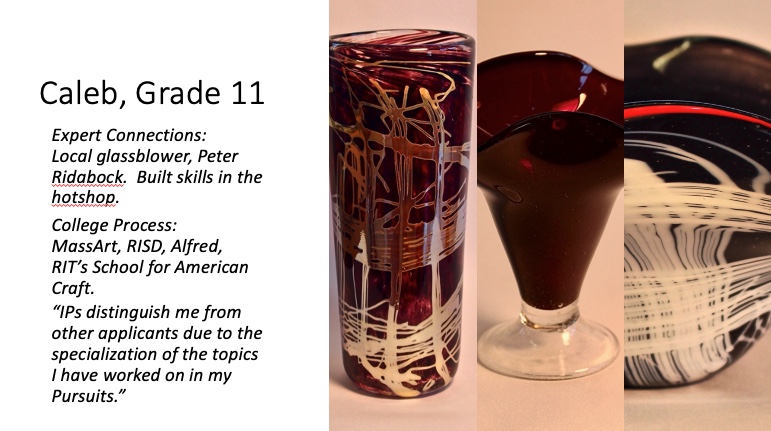
The growth of the program has been extraordinary. We now have many examples of how IPs have differentiated our students and directly supported their college application process. Examples include a student with an audio engineering IP being accepted into the Clive Davis Institute of Recorded Music at NYU’s Tisch School. Another student that built a video game is now continuing his education at Stanford. A student that designed a concussion awareness IP is at Georgetown as a Human Science major. And a student that developed a 4-year body of work around cancer research is graduating this year from Carnegie Mellon. Students at Berwick learn to leverage IPs and may use their project work as the subject of college essays, key discussion points in a college interview, and submit the project as a college supplement.
The momentum of the IP program has fueled a variety of curricular changes and supported many Project Based Learning initiatives on campus. Berwick recently shifted away from AP courses and created what’s known as a Pathways Program, in which Innovation Pursuits are a key component for successful completion. Berwick embraces a culture of innovation beginning in the Lower School and continuing through the Upper School. Students are learning and experiencing real world skills and learning environments. They are collaborating, networking, goal setting, managing long-term projects, and learning how to fail fast and iterate. Students are also writing and documenting as part of the IP as well as publishing and speaking publicly.
IPs can also be used to level the playing field for students who may not thrive in traditional coursework. With agency and students’ ability to select the subject or topic, many often comment that the project was fun and would find themselves spending hours and hours working without even realizing how much time had passed. This was true for a Berwick student that was very interested in electronic music. For this student, Innovation was his varsity sport, and Innovation was his arena to feel accomplished and recognized. This student graduated from Berwick and went on to study cybersecurity.
Innovation at Berwick has also strengthened connections with communities of interest in the school, such as recent alumni, parents, grandparents, and friends of the Academy. Innovation has been used to attract new students to campus as well as to recruit new employees.
Highlights over the years include a continued increase in the number of students that participate in the IP program. In our first year we had just 4, in our 4th year the number of IPs jumped to 36, in our 6th year we had 44, in our 8th year we had 48, and now after 10+ years, we have almost 70 Innovation Pursuits conducted annually on campus from grades 4-12.
Notable networking opportunities over the last couple of years include interviews with Dean Kamen of DEKA, Dr. Robert Cantu of the Concussion Legacy Foundation and consultant with the NFL, Chris Cassidy (NASA astronaut), Dr. Mark Drela (professor of aeronautics at MIT), and baseball greats, Joe Torre, Alex Cora, Sam Fuld, and Alex Rodriguez.
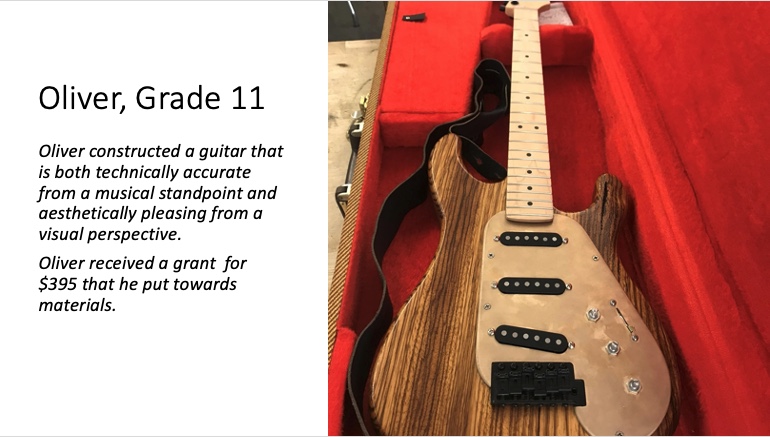
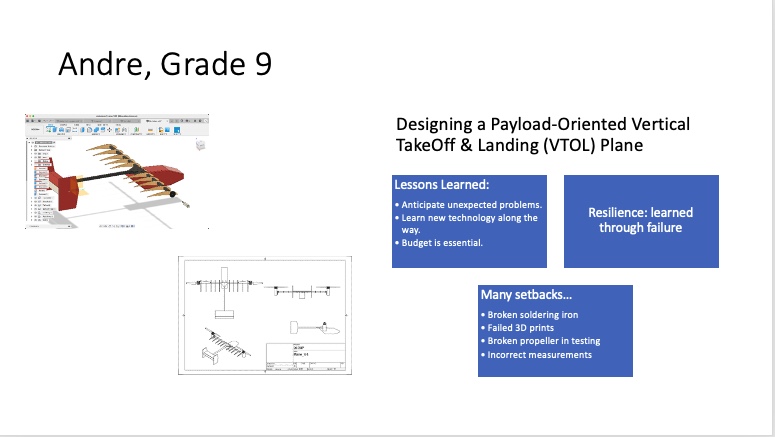
Additional student success stories include one student presenting at national Maker Fairs in NY and CA on his autonomous kayak IP and one innovation team successfully applying and receiving a utility patent for a headphone/speaker design. Job shadowing opportunities have taken place at DEKA, Pratt & Whitney, Exeter Hospital, NH Fish and Game, Lucid Skis in Freeport (Maine), and Grain Surfboard in York, Maine. Thousands of dollars have been awarded in the form of student grants and supported through the Berwick Parent Community.
Looking forward, my goal is to formalize the IP process, increase work in the service innovation sector, continue to work closely with students to develop significant PBL experiences, and host a regional Innovation and Creativity Conference or Symposium open to other students, grades 7-12, as a forum to bring young creative minds together to share ideas.
For more information, please contact Darcy at [email protected].
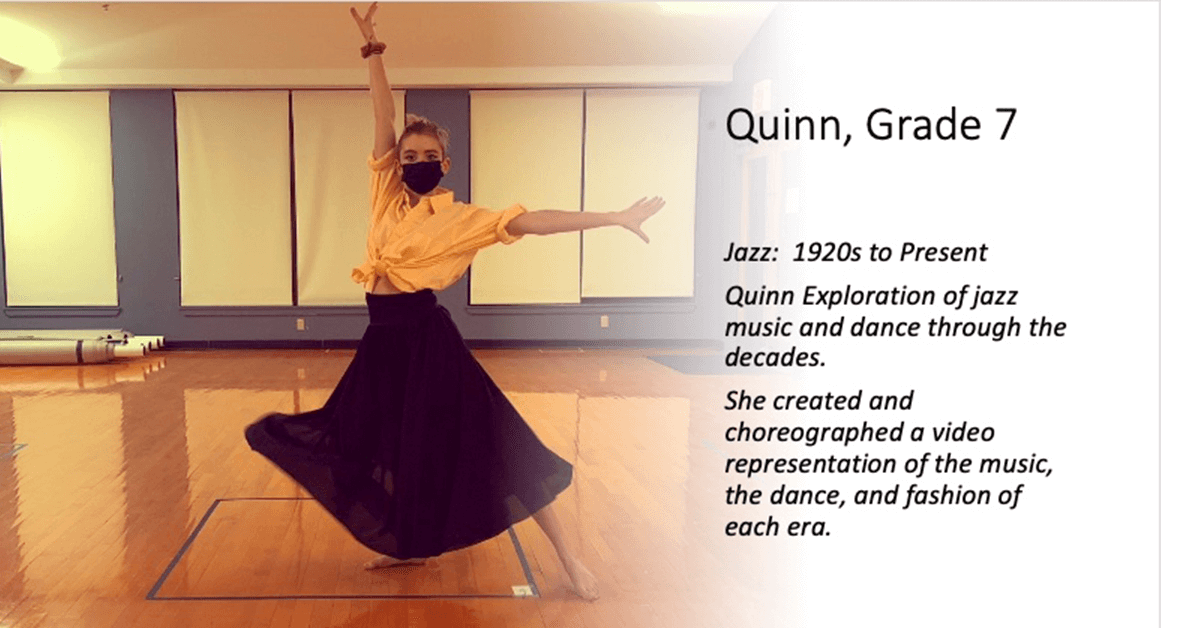
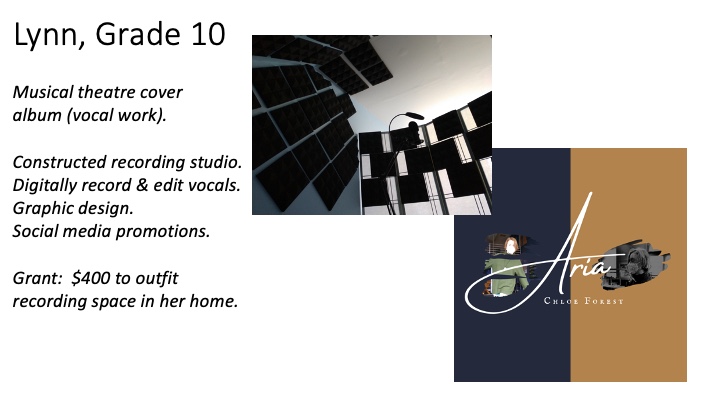
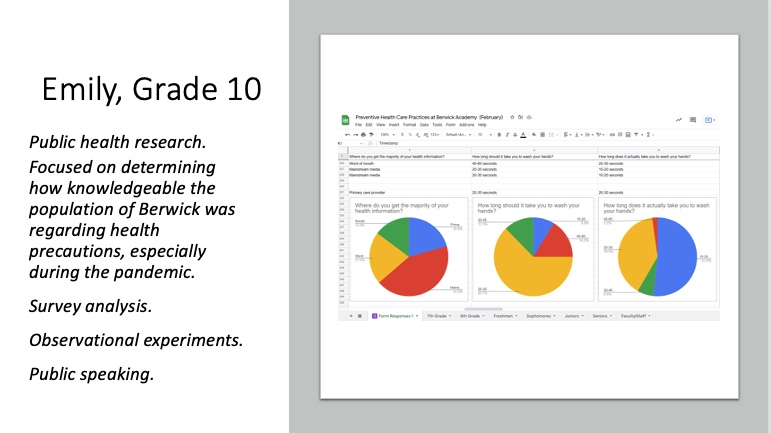
Please find photos and case study summaries below.
 |  |
 |  |
 |  |
 |
You may also be interested in reading more articles written by Darcy Coffta for Intrepid Ed News.

I am thrilled to see how much the program has flourished and grown under Darcy Coffta’s leadership over the years. In 2013 I had the opportunity to play a small roll in the program which remains the most memorable part of my experience working in the Berwick Academy Upper School Library for 3 months. The program gives students the tools to become independent learners capable of pursuing their passions and developing lifelong opportunities to have meaningful lives.