


November 8, 2023
Remember the last time you were working on something, got deeply absorbed in it, and lost track of time? That’s called being in a state of flow. Flow is a mental state that correlates highly to our most productive and effective moments of work. The flow state is also when we do our best learning.
The study of flow states in individuals has been well described over the last 20 years by researchers at Yale and elsewhere. We use different words in different contexts to describe how flow feels. Flow states are described by athletes as being “in the zone.” They’re described by meditators as losing a sense of self. They’re described by artists as having deep immersion in their tasks. If you’ve ever seen a young person in school, deeply immersed in their work, they’re in a flow state.
Humans seek out flow; we like it. It is also good for us. We know that flow is good for us just by looking at the neurochemical release of people in flow states—it’s a healthier state of being. And so when we think about our waking lives we have three conditions, we can exist in flow, turbulence, or some combination.
From Individual Flow to Team Flow to Work Flow
There is another dimension to flow outside of the subjective state of individuals. It turns out that flow also exists within groups of people in all kinds of contexts: sports teams, classrooms, dance floors, board rooms, and all such places where humans gather to collaborate. Teams that maximize their collective flow are most effective in turning talent into results. Musical groups that don’t get into flow don’t sound as good as those that do.
As groups of people collaborate in a school or on a team, their work should also ideally flow. A workflow is just a standardized, repeatable process by which something of value to the organization gets done. Digital tools are increasingly combining with human-centered management methods to make workflows more transparent and visible to the people running them. The new way of working is often called Agile, which is a way of working that is more team-based and adaptive than the standard command and control and rigid/linear methods that those of us born before 2000 were told were “normal.” These methods are allowing school leaders new options for delivering value in the classroom, staff/admin offices, and board rooms.
Organizations’ workflows just happen in the course of operations. For teachers, homework comes in, gets graded or reviewed, and flows back to the students. For students, the assignments arrive in a stream of tasks and are ticked off one by one. So if we are comfortable with the idea of workflows in real life and the fact that we can also map a workflow, we are ready to get into how this applies in education settings and any other place where learning is happening. Interestingly, schools are in the business of creating knowledge value for their students, though many school leaders do not apply the emerging rules and best practices of being a ‘learning organization’ outside of education and are sometimes playing catch up as they work to improve their ability to adapt to changing needs inside and outside of campus.
Visualizing How Work Gets Done
For a school leader interested in pursuing more organizational adaptiveness and responsiveness, we need to start with an image of flow. Flow feels like it looks. On a day when you and those around you are “in the zone,” work gets done faster and more easily. On days with various sorts of turbulence, be they interruptions or a colleague in a foul mood, the work feels different: more effort is required, more friction, less progress, and, well… just a bumpier flow. Some organizations seem to operate in perpetual crisis and turbulence. Others are a smoother ride, both at the level of how individuals feel and also at the level of the work getting done. Here is a basic way to conceptualize the two extremes of how flow can exist.
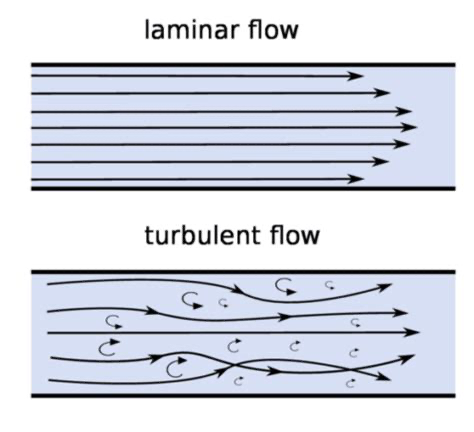
Leaders and doers in organizations aim to create flow at the individual and group levels: tuning the organization to create more flow states for the learner or the knowledge worker. The opposite of flow is all the reverse of those things. And we know what that feels like. When we’re at work, someone is bent out of shape. We’re in a classroom, someone is bent out of shape, and our train of thought is interrupted, or our collaboration keeps getting distracted by someone who does not want to create flow for the group.
A nice thing about flow at the group level is that it can be measured. Turbulence and flow can be estimated and made visible via artifacts like the Kanban board. The essential thing to understand is that flow is also improvable at every level, individual, team, and organization IF it can be made visible enough.
The takeaway as we think about creating organizational flow is this: flow has a rate, and it has known dynamics, such as the degree of alignment in an organization, or a teacher’s relative mastery of classroom environment management. Those dynamics describe the workflow’s relative level of turbulence. More flow means more learning or work is getting done per unit of time and energy. Having personally experienced flow at individual, team, and organizational levels I can say that it made work more fun, more productive, and simply less draining. Making the work visible to build a mental model was the start. And for those willing to do the work, once you and your team have this mental model of flow you can start to understand the dynamics of flow more deeply and enjoy the benefits of work flowing sooner, safer, and faster.