

July 31, 2023
No two journeys are ever alike, because no two pupils are ever alike —Daniel Quinn
I spent the best two months of my life during the summer of 2019. I’m not suggesting it was the easiest or most relaxing summer—in fact, the hardships and strains were part of what made these two months an extraordinary experience. I can never recreate that experience because my children will never be 13 and 9 again.
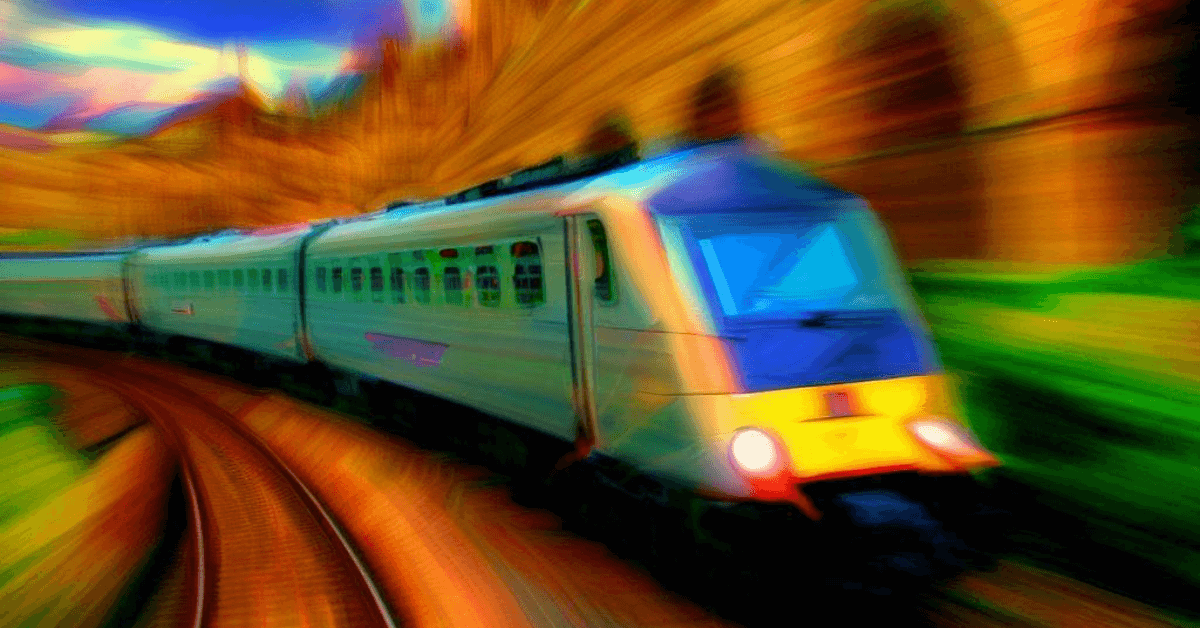
During the summer of 2019, my family (wife Charlotte, children Nico and Alexia) filled our travel backpacks with enough clothes and amenities to last seven days and set off on a seven-week Eurorail trip from Edinburgh, Scotland to Sofia, Bulgaria. Eleven countries in total. This was a weird intergenerational twist on adventures you usually associate with college friends on tour. I’d never done anything like this before and my children certainly hadn’t. None of us knew what to expect. We were free to choose our own adventure, and the only stipulations were the need to keep costs down and to find laundry facilities every six days. Not insurmountable.
It didn’t start out very well. Before we left, Alexia felt overwhelmed by the idea of bouncing around hotels during these two months. I suppose two months for a nine-year-old is two years in adult time. How will we find a place to sleep? What will we eat? What happens if we miss a train? Do you even know how to speak Slovakian? What happens if there is nothing to eat (a question important enough to ask twice)? How will we do laundry? Are you sure they have laundry facilities we can use? Gosh… we still hadn’t left home and apparently saying that it will all be ok, we will figure it out wasn’t quite going to do.
Eventually, we made it on that first train and beyond.
It’s funny all the little and big things the children noticed on the trip. You can get free refills of soda water in Scotland, but not in England. Belgian waffles taste pretty good in Belgium. People will help you if you look lost. Most of the time, we really will figure it out.
I also observed a few things. At some point near Nuremberg, Alexia stopped worrying about not finding seats on the train. Nico has a tremendous sense of confidence and leadership, unafraid to take matters into his own hands when a wrinkle shows up in the best-laid intentions. Charlotte and I complement each other so well when it comes to sharing and divvying responsibilities and to-do lists.
And then there are the things that surprised me, that I didn’t look for but were striking; the learning my children experienced that could never have been planned.
Example: Nico and I were walking side by side in Budapest, a city that neither Nico nor I had visited before, I was amazed by the size of the buildings. Colossal rectangular structures stretched across the length of the block, featuring imposing ornate doors that unveiled vast open courtyards at their center. I had never seen anything like these buildings, so I commented to Nico about how impressed I was.
You can guess what followed. He didn’t really seem to care much and certainly didn’t comment or make any signs this landed on him. I tried to bring it up again and that went even worse. Ho hum.
Then Nico made a comment on how in every country we visited so far, the cafés were the same but different, and isn’t it interesting how wherever you go, people like to meet up and talk over drinks? What is it about drinks that bring people together? Is it that you can get out more quickly than when you’re having a meal together?
Well, that’s interesting… I never thought about that.
Nico noticed patterns, and from these patterns emerged questions. This was his learning and I could never have planned for it. I realized that he had made new connections and gained insights into social and cultural relationships, and perhaps even some psychology. His learning emerged from the meaning he made of the environment (context) he experienced and actively participated in. I didn’t need a test to know what he learned. He told me. I wonder what else he took in that he didn’t share with me, or what he learned that remained at a subconscious level.
Learning is an emergent, relational process that can’t be controlled because we are all unique, and every context is a unique moment in time and location in space. No one can predict or plan anyone’s learning because the learner learns based on a unique set of possibilities. We can only create contexts that affect these possibilities.
This doesn’t mean that you can’t impart skills and knowledge. Facts can be memorized and algorithms mastered (such as arithmetical calculations with a pencil). But learning as a deeper experience cannot be pre-planned. We can only create the conditions for a greater likelihood for transformation to happen, and what emerges is unpredictable.
People aren’t machines. You can’t control them completely (even coercion has its limits). When you press the red button on the remote, the TV turns on. Living systems don’t have on/off buttons. They will only learn if and when they make meaning from their experiences, and the possibilities for what transformative change will look like depend on each person and the context from which they emerge.
There is nothing I could do to make Nico notice what I wanted to impart about Budapest’s architecture, or make him interested, or make him care. I could only provide a context (the trip to Budapest) in which he chose to notice or not himself (be disturbed) and he had the freedom to decide what to notice, within the boundaries of the context he was in (and that we co-created). In other words, I could do all the pointing and commenting I wanted, whether he followed my finger was his choice, never mind what he chose to see, to interpret, from which to make meaning. Maybe Nico did follow my finger, but the meaning he made was his own, from what caught his attention. (Now this opens many other doors around neurodiversity and ADHD, which Lennart Hennig believes is not a deficit, but a hyper-sensitivity of awareness.)
We cannot plan for deeper learning and attain predetermined outcomes. When we write down rigid sequences on unit planners, the only thing we can “make learn” with certainty are algorithms, recipes, or memorizations. Linear plans don’t allow for deeper learning because the latter is all about unpredictable non-linear complexity because we are living systems.
While we’re at it, perhaps we should even abandon the term “deeper learning” because it might imply digging in one direction. It’s actually not about going deeper down, it’s about extending in all directions. Why shouldn’t learning be about reaching for the blue sky?
Why shouldn’t learning be about the connections we create, not between things or people or subjects or concepts, but rather connections as relationships, the in-between from which things, people, subjects, and concepts become?
The most sophisticated, complex, meaningful, and life-affirming form of learning is rhizomatic. Not just life-affirming, life-emerging. Since no life exists on its own, but rather is the unique expression of relationships within a greater ecosystem, emergent learning is fundamentally relational in time, space, and matter. Emergent learning can never be replicated. It is alive.
There are some things we can plan for. Again, important facts can be memorized and algorithms mastered. We need algorithms and memorization to go beyond them, but we can’t be certain of what happens in the beyond. Yet let’s not fool ourselves into thinking that memorization and algorithms matter in themselves. They only matter if we do something with them. When conditions are favorable, rhizomes produce buds that develop into new shoots. These shoots emerge from the soil surface, forming independent plants. The growth of roots and shoots from these buds supports the emergence and establishment of rhizome-derived plants, if we apply them, if they lead to the generation of new ideas, responses, and artifacts. Content and skills are important, but only if they are put to use (and this opens up the conversation about what kind of use). Content and skills nourish emergent learning.
What might emergent learning look like in a school? Emergent learning is wild, but it’s not the Wild West.
The Grade 3/4 class my wife Charlotte led was studying sustainable cities. The students created, designed, and built urban areas from recycled materials (this could also be on Minecraft). They co-generated success criteria: 1) their city had to create the condition for all life forms to be happy; 2) it had to be clean, safe, and long-lasting; 3) it had to be peaceful. There is so much complexity in this simplicity! They had to know some content already, but most importantly, while building they had to justify each decision, which required further sophistication and adding to their knowledge, occurring simultaneously to the building, both augmenting each other, serving as the life force for each other. This was more than sticking solar panels on a roof; these cities had cultural underpinnings, trade-offs, and systems. With every day of building, their thinking was physically manifested in the materials, layering upon layer of their understanding.
In the Global Politics class, I led (which is very much concept and content heavy due to high-stakes exams) we regularly opened up the discussions to matters of significance—in the world and the students’ lives. This is a careful balancing act, one that requires spaces of trust, dialogue, and reciprocity. What is significant to the world? What is significant that the students are exposed to? What is significant to the learners? (To all these questions, we must ask why? Who holds the power to decide?) We opened up the discussion and latched on to the local manifestations, in this case, how concepts in international relations mixed with recent events manifest locally within the students’ zones of development and interest.
We didn’t explore the prison at Guantanamo Bay because the curriculum dictated we do. We explored it because of the questions the students wanted to delve into regarding the intersectionality of power, human rights, and development. We chose to pull on some threads, not others, to untangle the tangled to make meaning of and generate knowledge from the situation in Guantanamo Bay and this meaning was unique to our experience, through questions, through intellectual meanderings, through emotional engagement. The map we held in our collective hands identified landscapes but not roads. We drew the roads and visited the sites together. A cartographical co-creation of collective markings.
I could bring up other examples: “The Easter Bunny is ill, find a way to deliver the eggs using these materials” (a Gary Stager favorite); “You’re the president of Nepal and you’ve been elected to improve living conditions in your country, what do you do?;” or “let’s read The Hill We Climb and see where that takes us on our way to writing our own poetry.” So many possibilities and permutations. So many educator-learners are already bringing learning alive.
(Emergent) Learning cannot be decoupled from the principles of life. It is based on the idea that we are living systems, not machines, and we will make our meaning from experiences and nothing anyone can do can force us to learn what we don’t want. We may memorize facts, we may remember how to carry out algorithms, but none of that matters if it’s not applied to a greater endeavor (or can be done faster and better by a machine anyway).
Emergent learning is nothing new in practice or theory, yet by naming it, we commit an act of resistance against the old order. We elevate life over the machine. We appreciate that ecosystems thrive with diversity, not monoculture, which typically means more of the same, and that learning is a relational experience because life exists only as relations. Resistance is not always a struggle against. It is also a means of survival, like the trees that emit chemicals to resist parasitic invaders.[1]Thank you Sahana Chattopadhyay for this connection.
Emergent learning is about letting go, about inviting the learning to take on its own life. Emergent learning is about appreciating that this moment in time, in this space, with the living systems we encounter, will never be replicated again. Emergent learning is about respecting the unique and iterative expression of space/time/matter.
Emergent learning is rhizomatic, with no beginning and no end, no middle, and no boundaries. It is uncontrollably beautiful because it is about love and care for the relationship that exists between us and everything, about the trust we have, and the appreciation that we are all in this together.
All four members of our family took what they wanted from our trip. I found freedom in carrying everything with me on my back. Charlotte told me she learned what it means to give and take in a blended family. Nico discovered his ability to be resourceful despite unfamiliarity. Alexia… well Alexia is still a nervous creature, but the trip helped her find comfort knowing that sometimes not having a plan is the plan.
I will never know the totality of what that is and probably none of us individually will either. And that’s ok. We create the conditions for the learning to emerge, wild and unpredictable, so ever beautiful.
You may also be interested in reading more articles written by Benjamin Freud, Ph.D. for Intrepid Ed News.
Footnotes
| ↑1 | Thank you Sahana Chattopadhyay for this connection. |
|---|